
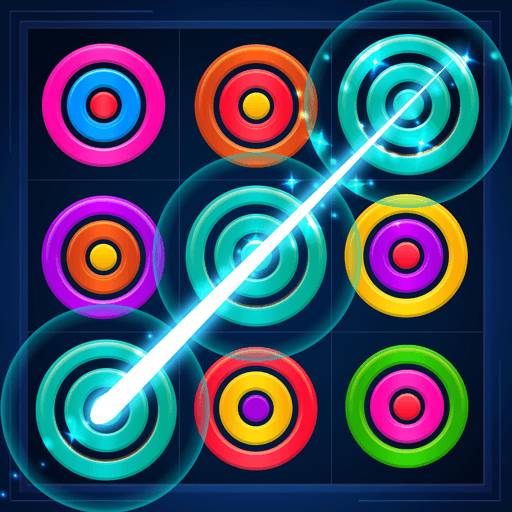

Give your eyes a simple search routine for a busy board.
Use a consistent scan
A crowded board can make your attention jump to the brightest object. Try scanning in a steady order instead, such as one row at a time. This helps you compare more of the board before choosing.
Check what the game actually asks you to match or change. Similar colors can be decoration in one game and the main rule in another.
Compare the next two options
When several moves look possible, compare what each one changes. Does it open useful space, connect a required group or leave a difficult piece isolated?
You do not need to calculate the entire board to make a more deliberate choice. Even comparing two plausible options can reveal a better reason for your move.
Read the feedback
After a move, notice what disappeared, moved or became available. If the board changes automatically, pause before making the next input. The move you planned a moment ago may no longer fit.
Explore Circle Crush and read its own rules. Use the opening attempt to learn how the board responds.
Try a different setting
A new theme can help you return to the same observation habit with fresh eyes. Christmas Time is another title to explore through the library.
Carry the process across games: read the objective, scan the scene, compare a couple of options and observe the result. Let each title define its own matching rules.